

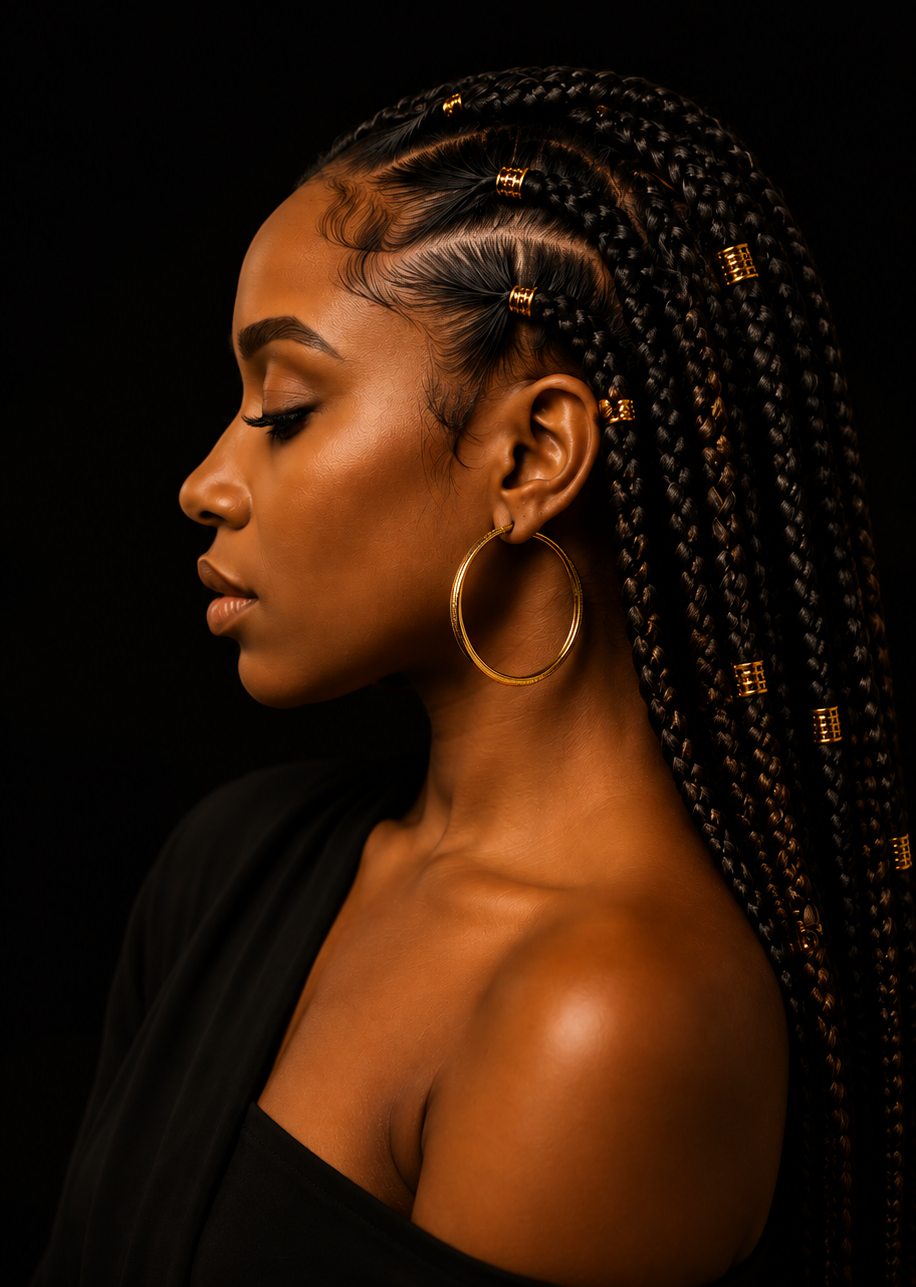

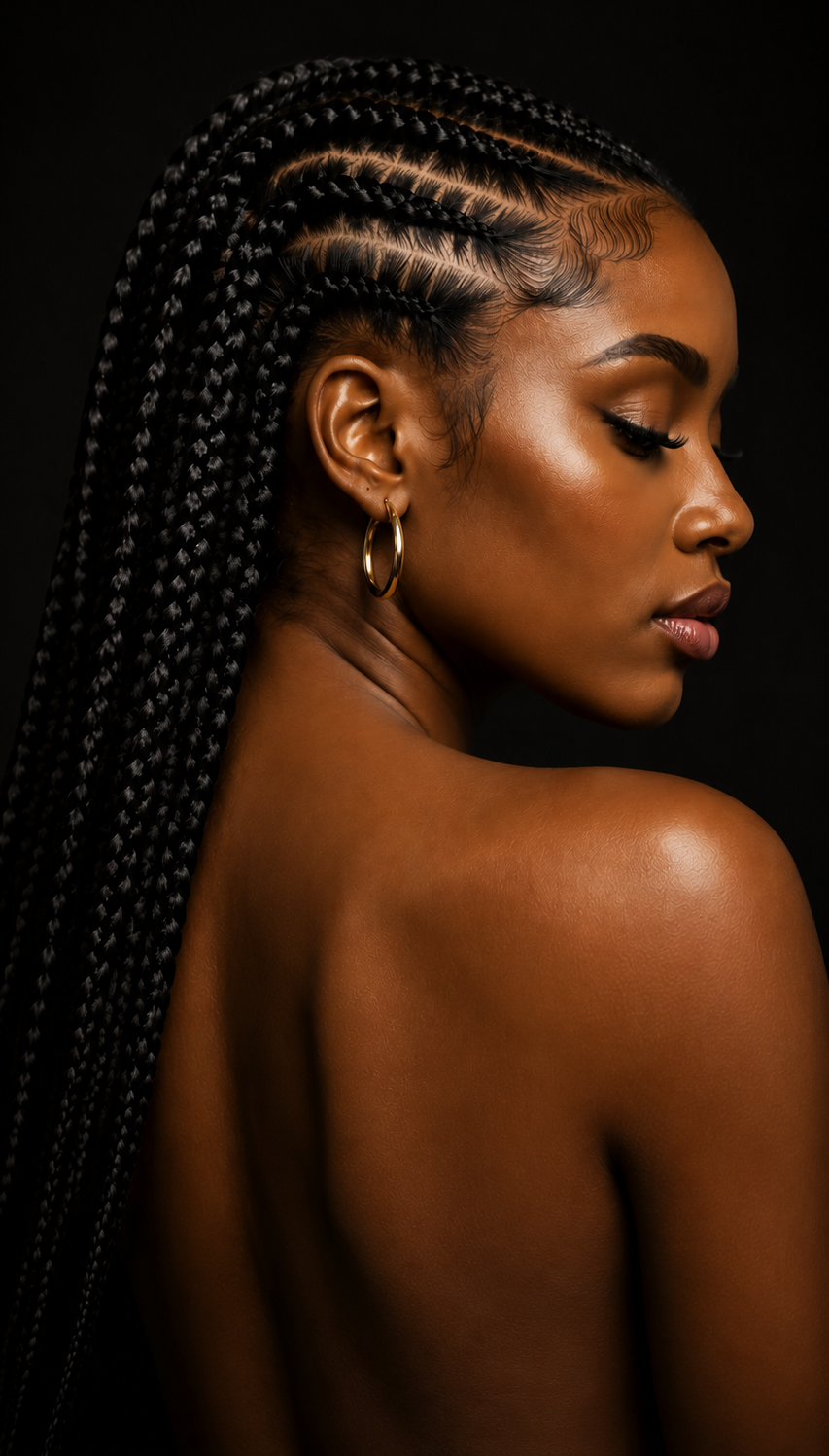

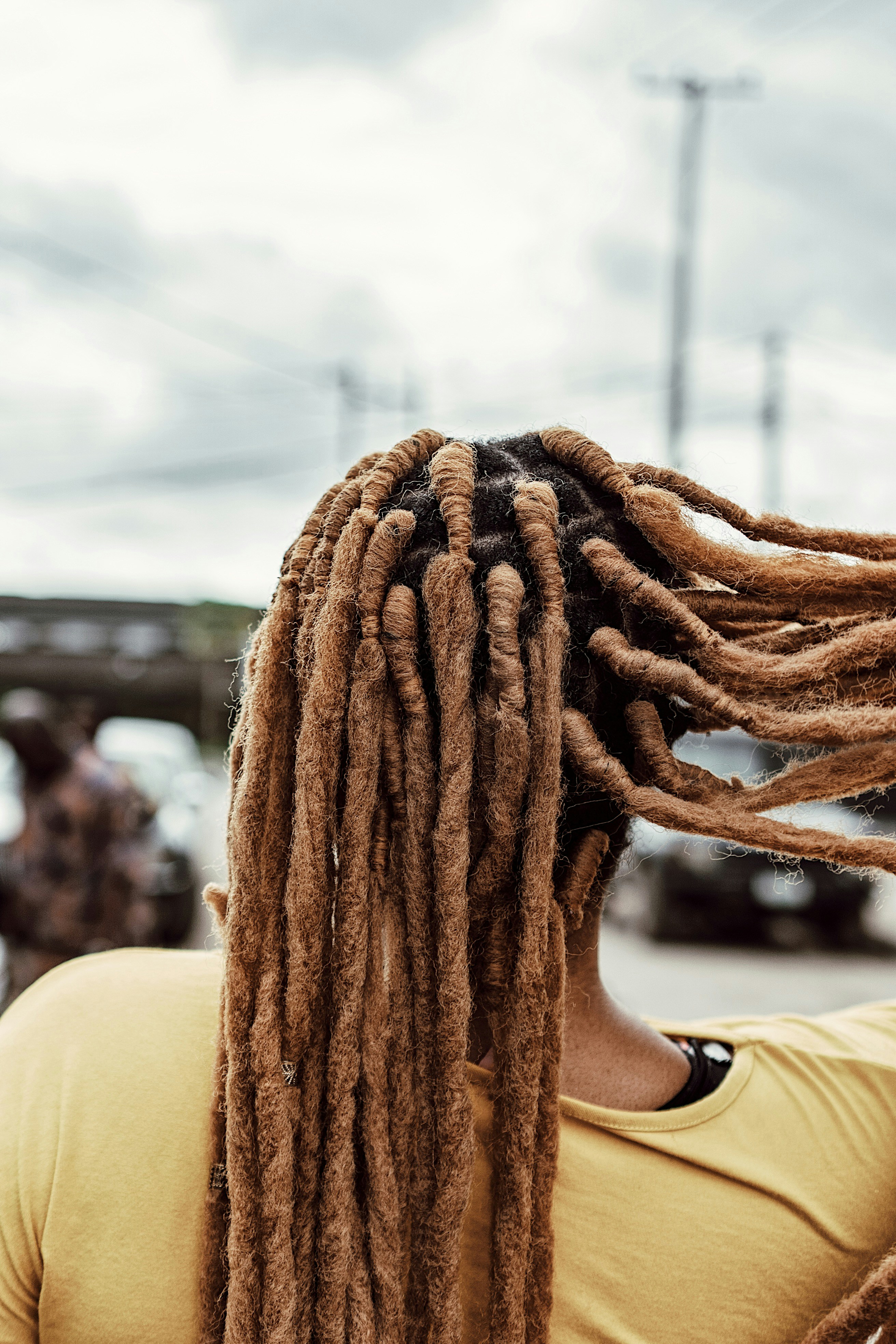
You have just left the salon with a fresh set of braids. They look perfect, they feel amazing, and you want them to stay that way for as long as possible. The good news is that braids are one of the lower-maintenance styles available — but that does not mean no maintenance at all. What you do in the first 48 hours and consistently over the following weeks will determine whether your braids look fresh at week six or unravelling at week three.
These are the exact aftercare instructions our stylists give every BraidsnCo client.
The First 48 Hours: What Not to Do
The first two days after installation are the most delicate. The braids are setting into their pattern and the scalp is adjusting to the new tension. During this period:
- Do not wash your hair. Getting the braids wet before they have settled can cause frizzing and loosen the braid pattern, especially at the roots.
- Do not pull your braids into a very tight style. Ponytails and high buns put tension on an already-tense scalp. Wear your hair down or in a very loose, low style.
- Do not apply heavy products to the scalp. The scalp needs to breathe. Heavy butters and creams can block the follicles and cause buildup that later leads to itching.
- Do sleep with a satin bonnet or on a satin pillowcase. This is non-negotiable from day one. Cotton absorbs moisture from the braids and creates friction that leads to frizz and breakage at the roots.
Scalp Care: The Most Important Element
Many clients focus entirely on the braids themselves and neglect the scalp — but healthy braids start with a healthy scalp. An itchy, dry or irritated scalp is the number one reason clients remove their braids early.
Every 2 to 3 days, apply a lightweight scalp oil or spray directly to the parts between your braids. We recommend products with tea tree oil (anti-inflammatory and anti-fungal), peppermint (cooling and stimulating) or jojoba oil (closely mirrors the scalp's natural sebum). Use the nozzle of a spray bottle or the pointed tip of an applicator bottle to get the product precisely onto the scalp, not onto the braids themselves.
If you experience persistent itching beyond the first week, it is usually one of three causes:
- Dry scalp — increase your oiling frequency
- Product buildup — it is time for a scalp wash
- An allergic reaction to the extension hair — in this case, contact your salon
Washing Your Braids
You can and should wash your braids. Contrary to popular belief, avoiding washing does not make braids last longer — it causes buildup, odour and scalp irritation that actually shortens the lifespan of the style.
Wash every 2 to 3 weeks using this method:
- Dilute a gentle, clarifying or moisturising shampoo in a spray bottle with water (roughly 1 part shampoo to 4 parts water).
- Section the braids to expose the scalp and apply the diluted shampoo directly to the scalp in sections.
- Massage gently with your fingertips — never scratch with your nails.
- Rinse thoroughly in the shower, directing the water downward along the braid length.
- Apply a lightweight conditioner to the mid-lengths and ends only — keep it away from the scalp and roots as it can cause buildup at the braid base.
- Rinse well and gently squeeze excess water from the braids.
- Wrap in a microfibre towel or an old T-shirt and allow to air dry. Sitting under a hooded dryer accelerates drying significantly. Avoid going to sleep with wet braids.
Moisturizing the Braids Themselves
Extension hair is synthetic or human hair that does not receive any sebum from your scalp — it will dry out over time. Every 3 to 4 days, lightly mist your braids from mid-length to the ends with a braid spray or diluted leave-in conditioner. This prevents the extension hair from becoming brittle and snapping, which can pull on your own hair at the braid base.
Sleeping Correctly
We cannot overstate the importance of a satin or silk bonnet. If you find bonnets uncomfortable, a satin pillowcase is the next best option — though a bonnet provides better coverage. For clients with longer braids, loosely gathering the braids to one side before sleeping reduces tangling and friction at the roots significantly.
When to Remove Your Braids
The maximum we recommend for any braided style is 8 weeks, and many styles are best removed at 6 weeks. Beyond this point, the new growth at the base of the braid begins to loc together, making removal more difficult, more painful and more likely to cause breakage. The hair is still growing the entire time your braids are in — the more growth there is between the scalp and the braid base, the more stress on the follicle.
Remove your braids carefully, one at a time, cutting the extension at the bottom first if necessary, and saturate the hair with a detangling conditioner before attempting to separate any locked or tangled sections.
"We always say: the installation is half the job. How you care for your braids afterward determines the other half."
— BraidsnCo Team
Need a refresher appointment or have questions about your braids between visits? Call us on 07917622668 — we are always happy to help.
The expert stylists at BraidsnCo Bradford — specialists in protective styling, natural hair care and braiding artistry since 2019.